

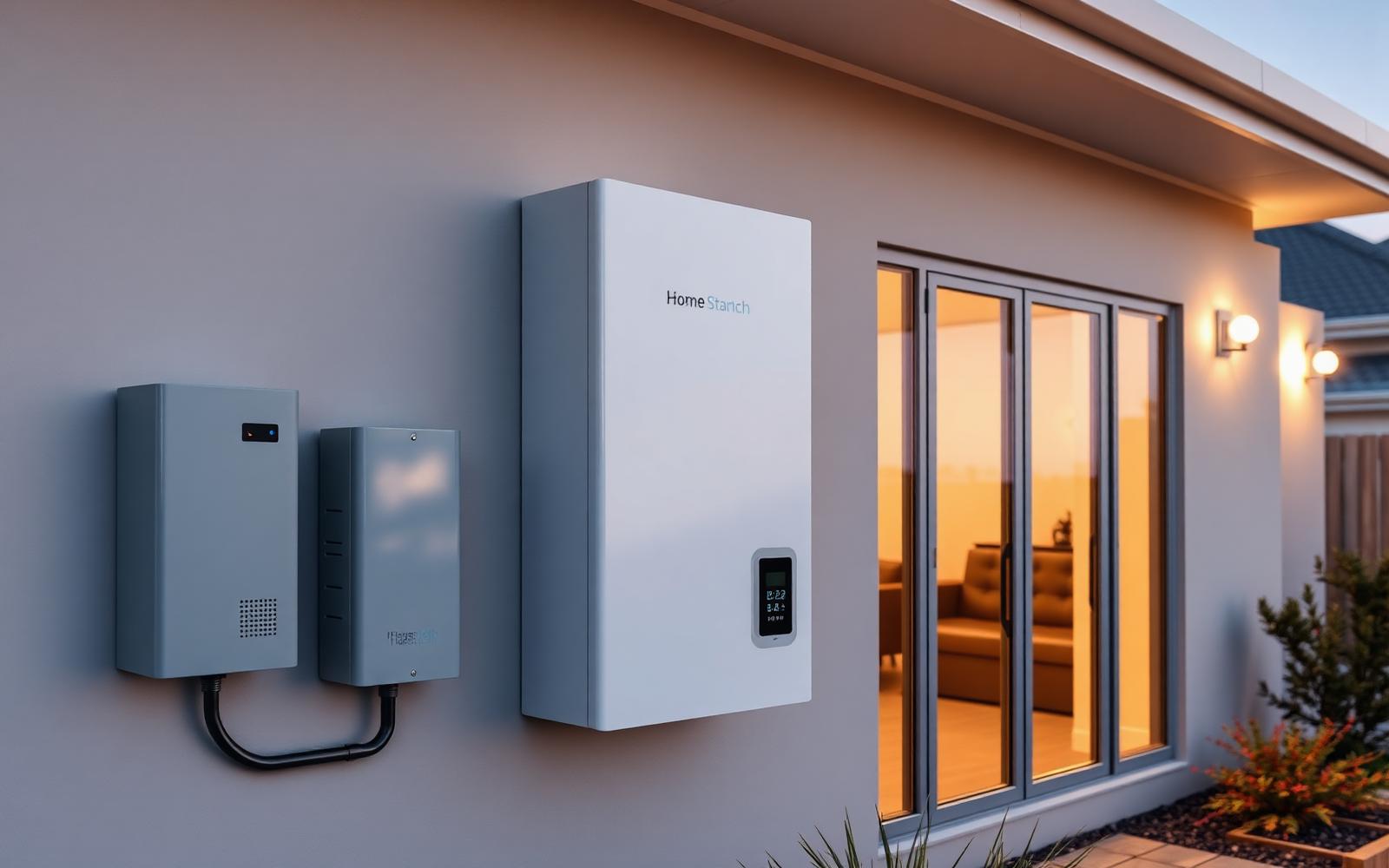
Battery storage
Use your own power at 7pm, not sell it at 5 cents
Feed-in tariffs keep falling while evening rates climb. A correctly sized battery closes that gap — an oversized one just costs money.
Sizing
How we pick capacity
We look at your overnight and evening consumption, not your total bill. Most homes land between 10kWh and 20kWh.
10 kWh
Covers a typical evening peak and overnight base load for a two to three person household.
16 kWh
Family homes with electric cooking, ducted heating or a pool pump running after dark.
20 kWh+
Large homes, EV charging overnight, or properties wanting extended blackout autonomy.
Backup
Blackout protection done properly
Backup is a wiring decision as much as a battery one. We nominate essential circuits with you before install.
- Essential-circuit backup board for lights, fridge, internet and power points
- Automatic changeover — typically under a second of interruption
- Solar continues charging the battery during an extended outage
- Optional whole-home backup where switchboard capacity allows
- Storm and heatwave pre-charge modes
Incentives
Rebates and what they actually cover
Battery incentives vary by state and change often. We confirm current eligibility for your address as part of the proposal, apply the discount up front, and lodge the paperwork.

Ready when you are
Model solar and battery together
The Smart Estimate shows the difference a battery makes to your bill before you commit.